
Allocadia platform & analytics
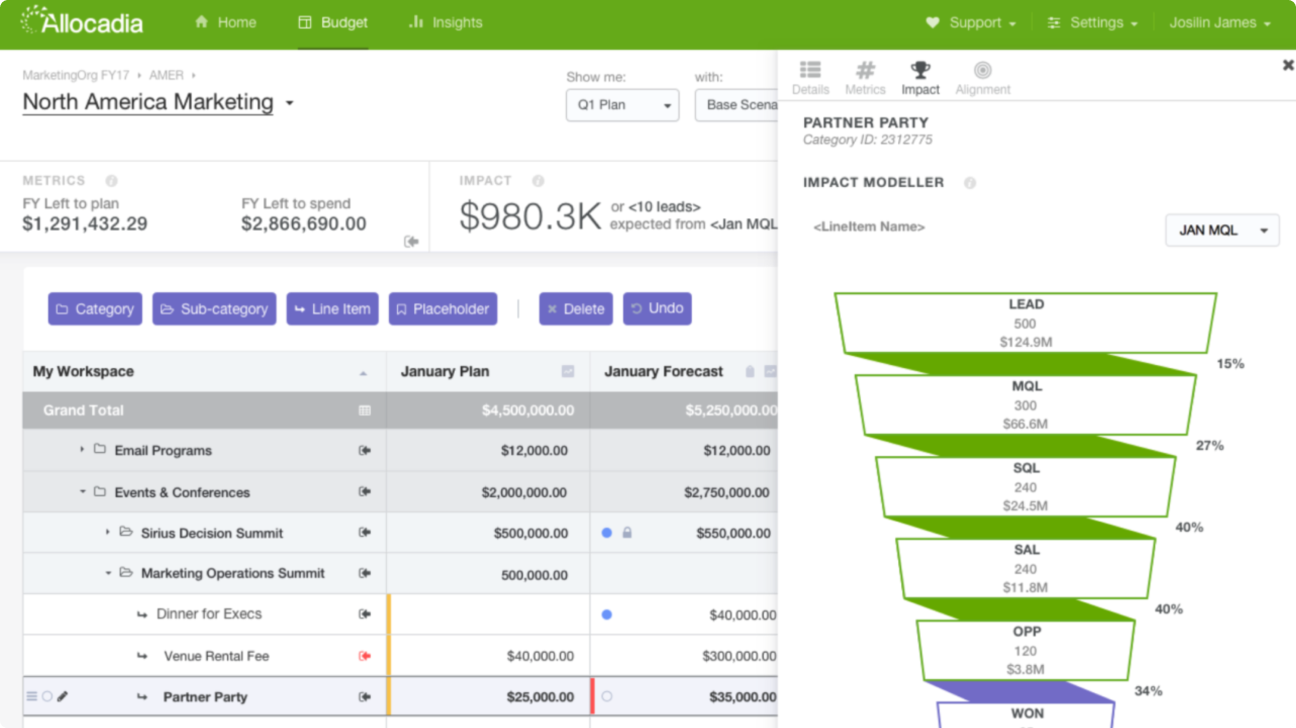
Allocadia was a bottom-up marketing budget management platform: a tool that let CMOs, marketing operations teams, finance, and marketing managers track and manage spend from the ground up. I joined as Senior UX Architect to lead a multi-phase modernization of the platform and a rethink of how it presented data to its users. Uptempo acquired the company in the years that followed.
The Challenge
The platform had two distinct problems. The first was visual: the interface was dated at a moment when the SaaS market was moving quickly and competitors were closing the gap. A product that looks old feels old, regardless of its underlying capability.
The second problem was deeper. The analytics should have been the platform's most compelling feature. Instead, they were built for analysts: pie charts, scatter charts, and visualizations that required fluency in the Allocadia data model to interpret. A marketing manager checking on their budget had to work hard just to understand what they were looking at. Most of them stopped trying.
My Role
I worked on a blended team with product managers, taking customer feedback and stakeholder requirements from research through delivery. My scope covered both the platform UI refresh and the analytics redesign: two parallel tracks that needed to land as a coherent whole, not as two separate updates shipped independently of each other.
The Process
Multi-Phase UI Modernization
This wasn't a rebrand. It was a purposeful modernization to bring the interface in line with where the SaaS market had moved. We reviewed and revised information architecture and workflows alongside the visual refresh, validating every structural change with internal and external subject matter experts before committing. The goal was a platform that felt current without disorienting the customers who already knew it.
Multi-phase delivery meant we could ship improvements incrementally rather than asking customers to absorb a complete overhaul at once. Each phase was scoped to a coherent area of the product, validated, and released before the next began.
Humanizing the Analytics
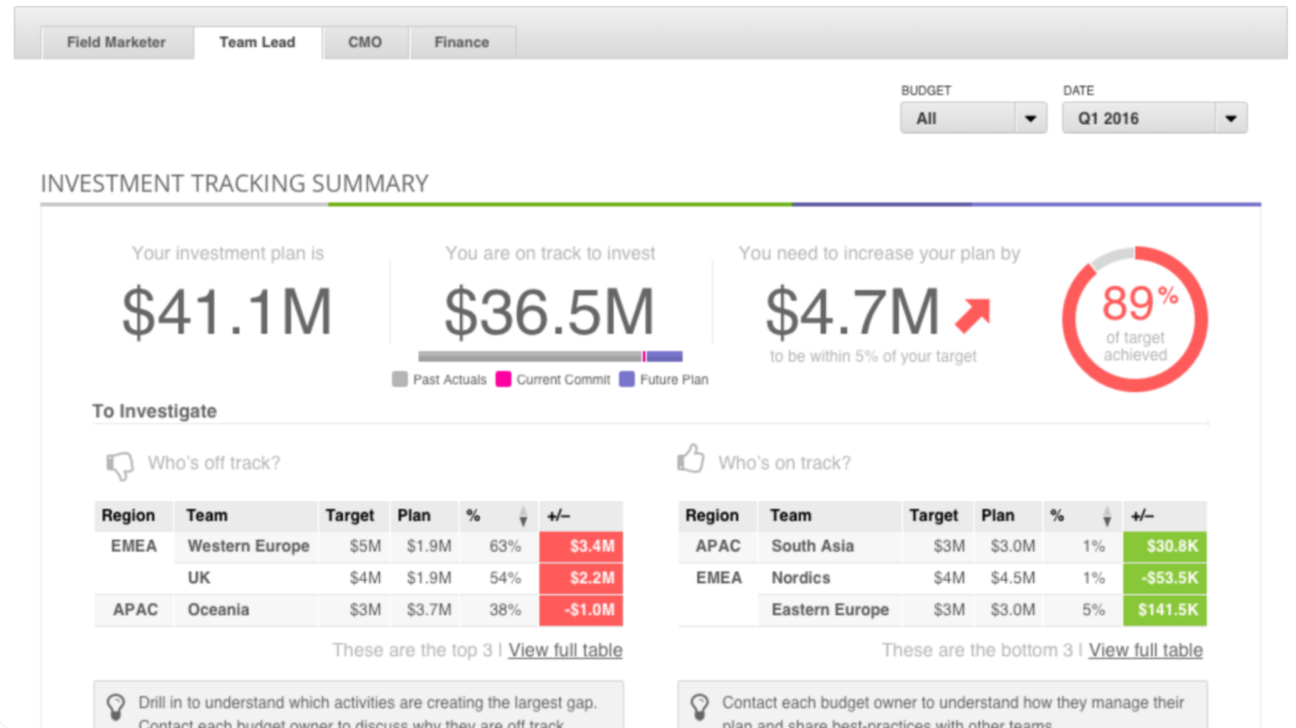
The analytics redesign started from a simple question: what is the user actually trying to know? For a marketing manager, the question isn't "show me a breakdown of my spend by category." The question is: am I on track? Where am I over? Where am I under?
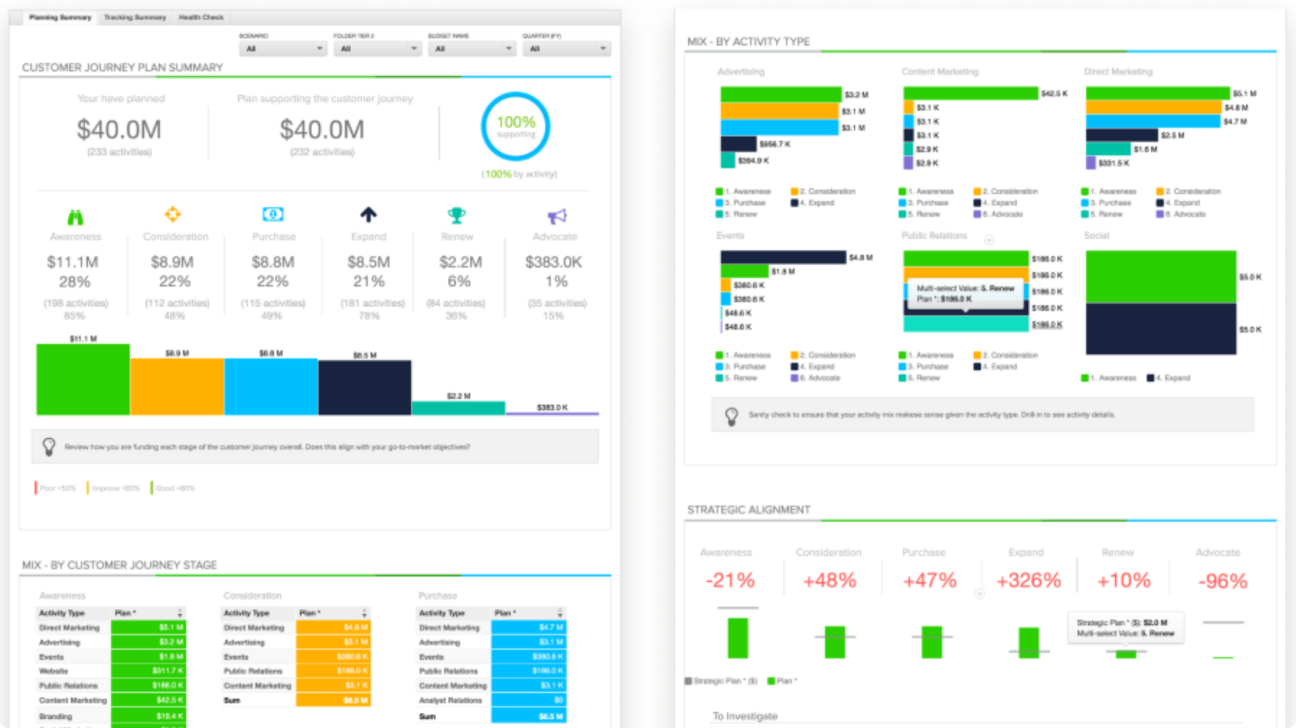
We redesigned the analytics around plain-language summaries. Instead of raw charts, users saw at-a-glance status: on track, over, under, by how much, across which categories. No data model fluency required. The goal was to make budget intelligence useful for a marketing manager checking in weekly, not just the finance analyst who lived in the data full-time.
Outcomes
I left Allocadia before the platform refresh rolled out in full, so direct metrics from the release aren't something I can claim. What I can say is that the product I left was substantially more modern and more accessible than the one I joined. A platform that's easier to understand for a broader range of users is a more defensible product in a competitive market.
Reflection
The analytics work at Allocadia crystallised something I've returned to many times since: the job isn't to display data, it's to answer the question the user is actually asking. Designing for that question, rather than for the data structure behind it, is what humanizing data really means in practice. It's also what democratization looks like: not simplifying the data, but making its meaning legible to a wider audience without requiring them to become analysts first.
A year at Allocadia also reinforced the value of multi-phase delivery in a modernization context. Customers who've built their workflows around a product need continuity. Shipping improvements incrementally, and validating with real users at each phase, is how you modernize without breaking the trust of the people who depend on it.